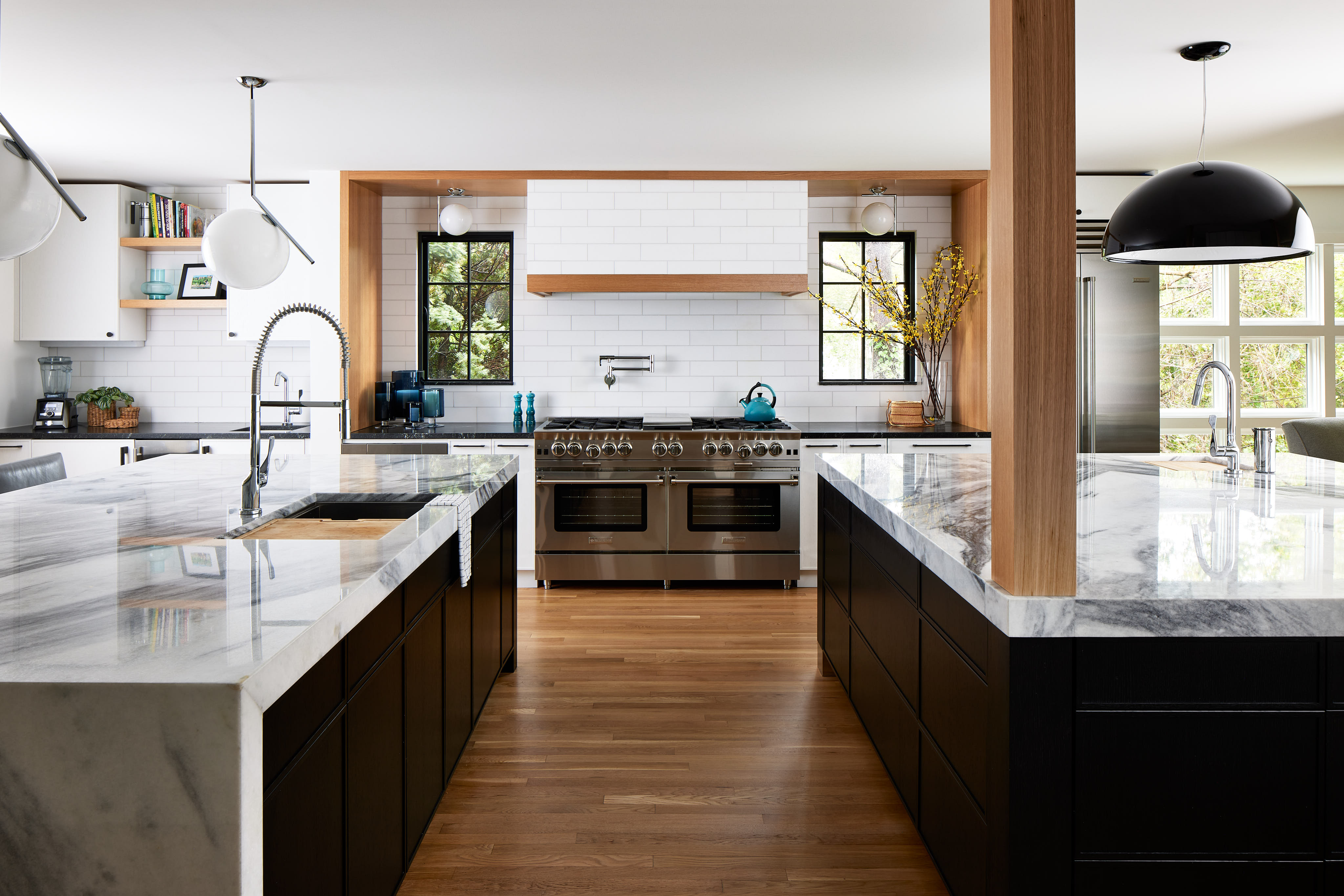
Financing a high-end renovation in the DC area is a very different process from financing a standard remodel. The projects are typically larger, and the equity positions are more complex. Most homeowners who want to do luxury remodels are working with equity loans instead of using savings, and choosing between them requires understanding how each one works in the current rate environment.
This guide covers the main options available to DC area homeowners and how to structure financing before the project gets underway.
Use the links below to navigate this blog:
- What Luxury Renovations Cost in the DC Area
- Your Main Financing Options
- How to Choose the Right Option
- What to Do Before You Hire a Contractor
- Frequently Asked Questions
What Luxury Renovations Cost in the DC Area
DC labor runs higher than national averages, and the permit process adds weeks to any project. High-end remodels in DC typically runs $400 to $800 per square foot. A full kitchen and primary suite renovation lands between $150,000 and $350,000 for most homeowners at this level. Whole-house projects on larger homes reach $500,000 to $1.2 million or more. Similar numbers apply to Maryland suburbs like Bethesda and Chevy Chase, where labor and material costs track closely with DC.
It's best that you secure financing before you finalize your project's scope. Your borrowing capacity shapes what is realistic, and discovering a gap between your budget and your plans mid-design costs time and money.
Your Main Financing Options
There are several viable options for luxury remodels in the DC area. While our team does not offer financing, we are well-versed in working with banks and the financing process.
Here's a breakdown of the most common options we've navigated with homeowners:
HELOC (Home Equity Line of Credit)
A HELOC gives you a revolving line of credit secured by your home's equity. You draw from it as needed over a 10-year period and pay interest only on what you use. The rate is variable. Current HELOC rate data puts the DC area range at 6.75 to 9.5% in 2026, depending on lender and credit profile. Most lenders let you borrow up to 80 to 85% of your home's current value minus what you still owe on the mortgage. For projects that unfold over time, a HELOC lets you draw funds as each phase starts. The main risk is that rates move. A HELOC at 7.5% today can be at 9% or higher by the time a later phase begins, so you need to account for that range when estimating monthly costs.
Home Equity Loan
A home equity loan gives you a fixed amount at a fixed rate. You know the payment before the project starts. Rates in 2026 are running 7 to 9%, and closing costs typically fall between $2,000 and $5,000. When you have a firm price from your contractor and a clear picture of what the work involves, a home equity loan is usually the simpler choice. You borrow a set amount, and the payment stays fixed through the life of the loan. If you are still working out what the project will include, a HELOC gives you more room to adjust as the plans develop.
Cash-Out Refinance
A cash-out refinance replaces your existing mortgage with a larger one and puts the difference in your pocket. For homeowners who locked in a low rate in 2020 or 2021, this option is harder to justify. If your current mortgage is at 3.5% and today's rates are at 6.5%, refinancing means paying the higher rate on your entire balance. A HELOC or home equity loan keeps the existing mortgage in place and only borrows against the equity.
A cash-out refinance makes sense if your current rate is already high, or if the amount you need is large enough that a second mortgage product cannot cover it on its own.
Jumbo Renovation Loan
Homes in DC, Bethesda, and McLean often exceed the limits for conventional financing. The Federal Housing Finance Agency sets the 2026 ceiling at $1,249,125 for a single-family home in high-cost areas, which covers DC, Montgomery County, Fairfax County, and Arlington. Above that number, you need a jumbo product, and lenders apply stricter standards.
Recent jumbo lending data show cash-out refinance rates running 6.10 to 6.93% for well-qualified borrowers as of early 2026. Lenders generally want a credit score of 700 or above, substantial cash reserves, and two years of tax returns. For loans above $2.5 million, some lenders require 18 to 24 months of reserves. Closing costs typically run 2 to 5% of the loan amount. If you have a good rate on your current mortgage, a jumbo home equity product preserves it while still giving you access to the equity you need.
Renovation HELOC (After-Renovation Value)
A standard HELOC caps your borrowing at what your home is worth today. A renovation HELOC lets you borrow against what the home will be worth once the work is done, which raises the ceiling significantly. A home worth $800,000 today with a $350,000 mortgage might support $290,000 in new borrowing on a standard product. If the same renovation brings the home to $1.1 million, a renovation HELOC could allow up to $540,000.
To qualify, lenders need your contractor's pricing, construction plans, and an appraisal estimating the home's value after the work is complete. This product works well for homeowners who have recently bought and have not yet paid down much of their loan.
Construction Loan
A construction loan pays out in stages as work is completed, rather than as a single lump sum. Your lender releases funds after inspecting each phase of the project, and you pay interest only on the amount drawn so far, at a variable rate typically running 8 to 10%. These loans work well for large-scale renovations involving major structural and systems work, such as additions or full teardown-rebuilds, since lenders base the loan amount on the home's projected value once the work is finished rather than its current value.
Most construction loans convert to a permanent mortgage once the project wraps, so you close once instead of financing through a second closing. Lenders typically want detailed construction plans, a signed contract with your builder, and a draw schedule before approving the loan, along with a down payment of 10 to 20%. If your renovation will keep the home under construction for many months, this structure matches your payments to the pace of the work instead of requiring you to carry the full loan amount from day one.
How to Choose the Right Option

The right product depends on your project's timeline, the size of the loan you need, and what your existing mortgage looks like. For a phased project, a HELOC lets you draw as each stage begins. When you have a firm price and a clear sense of what the work involves, a home equity loan is usually the better choice, since you borrow a set amount at a fixed rate, and the payment does not change.
If you locked in a low mortgage rate, protect it. A cash-out refinance resets that rate across your entire balance, and the math rarely works in your favor if your existing rate is under 5%. For homes above the $1,249,125 limit for conventional financing in the DC area, you need a jumbo product, and lenders will look more closely at your credit and your income. If you bought recently and have not paid down much of your loan, a renovation HELOC may give you access to significantly more money than a standard home equity product.
For phased projects that run two or more years, locking in a fixed home equity loan for each phase as it approaches gives you more cost certainty than carrying a variable rate through the full timeline.
What to Do Before You Hire a Contractor
Getting financing in order before you reach out to contractors makes the overall process much smoother. You can go into initial conversations knowing your set budget, which keeps you from committing to a plan you can't fund. Lenders who pre-approve you also give contractors a signal that the project is ready to move forward, and some will price more competitively as a result.
Match Your Payment Schedule to the Work
How you release money during construction matters as much as which product you choose. A reasonable structure starts with 10% at signing, then 25% once materials arrive. Another 25% will be released when the major structural and systems work is finished, followed by 25% once the project is essentially done. The final 15% comes after the contractor has addressed all remaining items. This keeps payments tied to progress and protects you if work slows between phases.
Be Careful With Contractor-Offered Financing
Some contractors offer financing through a partner lender. Many of these arrangements pay the contractor a fee of 5 to 15% of the loan amount, and that cost gets built into your project price. A $60,000 project quoted through a contractor's lender might come in at $52,000 if you bring your own financing, because the contractor no longer needs to cover that fee. Getting pre-approved on your own before reaching out to contractors gives you leverage on both the rate and the project price.
Frequently Asked Questions
What is the best way to finance a luxury home renovation in DC?
It depends on your equity position, your existing mortgage rate, and whether your project has a fixed cost or will unfold in stages. A home equity loan works well when you have a firm price and want a predictable payment. A HELOC is better for projects where costs arrive over time. If your home's value exceeds the limit for conventional financing, you will need a jumbo product. Getting pre-approved before you finalize the project scope is the most important first step.
What is the difference between a HELOC and a home equity loan?
A HELOC is a revolving line of credit with a variable rate. You draw from it as needed and pay interest only on what you use. A home equity loan gives you a fixed amount at a fixed rate with payments that start immediately. HELOCs suit projects where costs arrive in stages. Home equity loans are better when the total is known upfront and you want a predictable monthly payment.
How much can I borrow for a home renovation in the DC area?
Most lenders let you borrow up to 80 to 85% of your home's current value minus what you owe on the mortgage. On a $1.2 million home with a $500,000 balance, that comes to roughly $460,000 to $520,000. A renovation HELOC, which calculates borrowing based on what the home will be worth after the work, can raise that ceiling significantly.
Is a cash-out refinance a good idea for financing a renovation in 2026?
If you locked in a rate under 5%, probably not. Refinancing means paying the current market rate on your entire mortgage balance. A home equity product keeps your existing rate in place and only adds debt against the equity. A cash-out refi makes more sense if your current rate is already high or if the amount you need is too large for a second mortgage product to cover.
Can I borrow against the future value of my home after renovations?
Yes. A renovation HELOC lets you borrow against what the home will be worth once the project is complete. Lenders need your contractor's pricing, construction plans, and an appraisal of the finished home to calculate the loan amount. This option helps most when your current equity is limited relative to the size of the project.
What credit score do I need to qualify for a renovation loan?
Most DC area lenders want a 680 or higher for standard home equity products, with better rates available at 720 and above. Jumbo products generally require 700 or higher, and some lenders set the minimum at 720 or 740 for larger loans. Lenders also look closely at how much debt you carry relative to your income and how much cash you have available.
What are current HELOC and home equity loan rates in the DC area?
As of 2026, HELOC rates in the DC area are running 6.75 to 9.5% variable. Home equity loan rates are running 7 to 9% fixed. Jumbo cash-out refinance rates are landing between 6.10 and 6.93% for well-qualified borrowers. Rates differ meaningfully from one lender to the next, so it is worth getting quotes from several, including local credit unions, before committing.
Should I pay cash or finance a luxury renovation?
Paying cash makes sense if it will not deplete your emergency reserves or force you to sell investments at a loss. For projects over $150,000, a home equity product often makes more sense. Rates are competitive, and keeping your cash available gives you flexibility if the project runs over budget or something unexpected comes up during construction.
What is a jumbo renovation loan and when do I need one?
A jumbo loan covers borrowing above the limit for conventional financing. In the DC metro area, the Federal Housing Finance Agency sets that limit at $1,249,125 for a single-family home in 2026. Above that number, lenders want higher credit scores, more cash in reserve, and typically two years of tax returns.
Should I get pre-approved for financing before hiring a contractor?
Yes. Pre-approval tells you what you can actually spend before you start designing to a number. It also signals to contractors that the project is real, and some will sharpen their pricing as a result.
Ready to Plan Your DC Renovation?
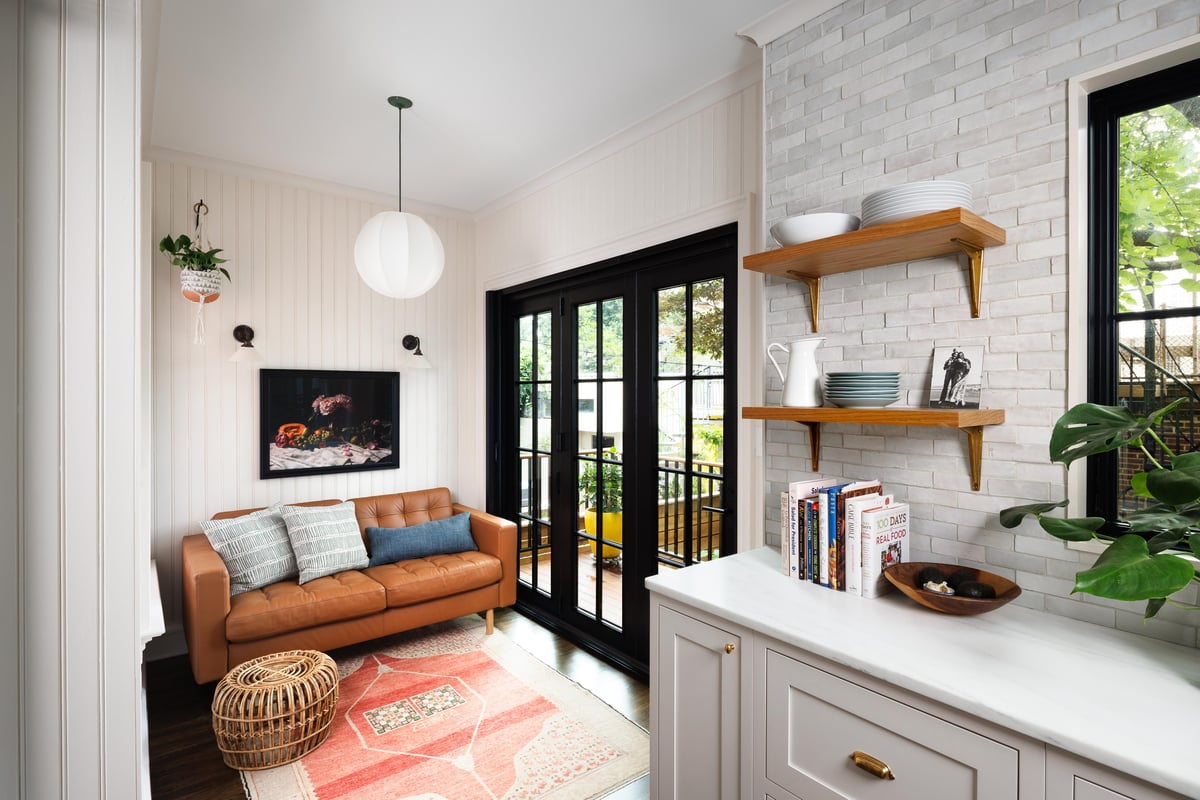
At Four Brothers Design + Build, we work with homeowners across the DC metro area to transform their spaces with luxury renovations. We offer a full range of services, including kitchen and bathroom renovations, home additions, architectural services, and full home renovations. If you want to talk through what you are planning, our team is ready to help you.
Please browse our portfolio to see the work we've done for homeowners like you.
Contact Us
Reach out to our team to get your project started.

.png?width=1200&height=1200&name=Cost%20Guide%20Graphics%20FB%20(3).png)